Technology leadership & engineering for private equity

Build with AI.
Stay in control.

Fractional CTO leadership and forward-deployed AI engineering for private equity firms.

A deeply technical partner for investment firms becoming AI-native: we design, build and govern AI systems inside your environment — on your data, owned by you.

100+software projects and agentic solutions built for private equity

  • Runs in your tenancyOn infrastructure you approve
  • Any model, any vendorNo mandatory stack
  • No vendor markupsYou contract directly
  • You own everythingCode, data, evaluations

Real data Lake Tahoe basin — USGS 3DEP elevation and USGS multibeam bathymetry. The natural rim: 6,223 ft.

Perspective

Your data is your edge. Don’t rent it out.

AI labs and data brokers are now asking financial firms to sell them their spreadsheets, memos, emails and outcomes. They want the raw material to build training environments — rules, tools, objectives and rewards, run millions of times until a model can do one job like an expert.

The largest firms won’t sell. They understand what that record is worth, and they are building their own capability on top of it. The bet the labs are making is that enough other firms will sell — or will simply layer their work onto someone else’s general-purpose model.

We think a firm’s proprietary data is its training ground. Owned, governed and compounded, it becomes context every agent can use, evaluations that keep systems honest and, where the economics justify it, models that work the way the firm works. Our job is to help you build that capability — and keep it.

Services

Technical leadership and the engineering to deliver it.

Most firms must choose between advice that never ships and engineering nobody owns. 6223 leads the decisions and builds the systems, with governance designed in from the first day.

Leadership

Fractional CTO & AI technology leadership

Senior technical ownership at partner level, without a full-time hire.

  • AI strategy, roadmap and investment case
  • Architecture and build-vs-buy decisions
  • Vendor and model diligence, with no markups
  • Security and compliance coordination with your teams
  • Budgets, spend against outcomes, delivery oversight
  • Explicit decisions on what not to build

Engineering

Forward-deployed engineering & AI systems delivery

Engineering done inside your environment, taking systems from prototype to production.

  • Agents, applications and automations
  • Connectors to CRM, data rooms and data providers
  • Context, retrieval and data pipelines
  • Evaluation, testing and staged deployment
  • Documentation, training and handoff
  • Iteration once systems are in use

What we build

The foundation for an AI-native firm.

Built in your tenancy, on infrastructure you approve, to the standard your security and vendor-risk teams will review.

  1. 01

    A governed environment to build in

    Your people and their agents need to build — safely. We stand up the environment: identity-aware access, data boundaries, sandboxed execution, and a release review before anything staff-built touches production.

  2. 02

    A context layer you own

    Deals, theses, relationships and decisions captured as a governed, firm-owned knowledge layer that any model can use — with sensitivity walls and a read audit, not locked inside a single vendor.

  3. 03

    Agents wired into your systems

    Origination, diligence, portfolio monitoring and investor-reporting workflows connected to your CRM, data rooms, research providers and document stores — through permissioned connectors and MCP servers.

  4. 04

    Evaluation, observability & audit

    Evaluation harnesses built from your real cases, tracing on every run, and an evidence store your security team, auditors and LP due-diligence questionnaires can draw on.

  5. 05

    A model gateway with metered spend

    Multi-vendor model access behind one policy point: approved providers, routing, budgets and cost allocation by team and workflow — so you can change models without rebuilding.

  6. 06

    Firm-specific models, where they pay

    At the top end: evaluation and reinforcement-learning environments built from your own data and outcomes, synthetic data where needed, and models tuned for your highest-value workflows. You keep them.

Reference architecture

Fast-changing applications. A foundation that holds.

Applications and agents will change every quarter. The layers beneath them should not have to. This is the shape of what we architect and implement — selected and configured per engagement, inside your walls.

Changes every quarter Built to last · inside your walls

  1. 05 · Apps & agents
    Workflows the firm buildsOrigination, diligence, portfolio monitoring, investor reporting — staff-built apps released through review.
    • Agents
    • Internal apps
    • Automations
  2. 04 · Model gateway
    Multi-vendor, meteredApproved providers behind one policy point; routing, budgets and cost allocation by team and workflow.
    • Approved models
    • Routing
    • Budgets
  3. 03 · Context & data
    Firm-owned knowledgeDeals, theses, relationships and decisions as a governed context layer any model can use; classified and versioned.
    • Retrieval
    • Classification
    • Lineage
  4. 02 · Integrations
    Permissioned connectorsCRM, data rooms, research providers and document stores through least-privilege connectors and MCP servers.
    • CRM
    • Data rooms
    • MCP
  5. 01 · Identity & policy
    Who can do whatYour identity provider for people and agents; data boundaries, deal-team walls and approval gates as policy.
    • SSO
    • Entitlements
    • Approval gates
Evaluation & observabilityEvaluation suites from real cases; tracing on every run; regression checks before release.
Audit & evidence storeActions, sources and approvals recorded — for security review, audit and LP due-diligence questionnaires.
Illustrative Reference architecture — not a depiction of an existing 6223 platform. Components are selected per engagement, from your existing vendors where possible.

Security & governance

Compliance and security first. Stated plainly.

Your people should be able to build with AI without throwing confidential data into tools nobody approved. That only works if the controls come first.

Where work runs
Inside your walls: your tenancy and infrastructure you approve — not necessarily on-premises. Approved external model providers are used only under explicit, logged policy.
Access
Least privilege for people and agents alike, tied to your identity provider. Human approval gates on consequential actions.
The rules that matter in PE
Deal-team walls, NDA data-room material, LP confidentiality, and the records your investors and regulators may ask for.
Evidence
Logging and provenance by default, so security reviews, audits and LP due-diligence questionnaires have something to draw on.
Your reviewers
Built to support your vendor-risk and security review. Policies are drafted for your counsel to approve.
Control approach — how each control is enforced and who approves it
ControlHow it’s enforcedWho approves
Data accessYour identity provider; per-user and per-agent entitlements; deal-team walls as policyYour IT / security
Model providersApproved list behind one gateway; routing and logging by policyYour CTO / CISO
Consequential actionsHuman approval gates for writes to systems of record and external communicationsNamed business owner
ReleasesEvaluation suite and release review before anything staff-built goes liveYour release owner
PoliciesAcceptable-use and agent-permission policies drafted for reviewYour counsel
EvidenceLogs, provenance and approval records retained in your environmentYour compliance team

6223 does not provide legal advice or guarantee regulatory compliance.

How we work

A program, with artifacts you keep.

Every engagement has one accountable owner, an agreed set of KPIs before anything is built, and a documented handoff. Your team can take over at any phase.

  1. 014–6 weeks

    Diagnose

    Workflows, systems, data and spend mapped; opportunities ranked; what not to build, decided.

    • Opportunity map with value and cost assumptions
    • Current-state architecture & data inventory
    • Ranked roadmap with an owner per item
  2. 02Program phase

    Foundation

    The governed environment every later system runs in: identity, permissions, context layer, model gateway, audit.

    • Architecture decision records
    • Data classification
    • Acceptable-use & agent-permission policy for counsel
  3. 03Iterative

    Build

    Agents and applications connected to your systems of record, released through review gates.

    • Working systems in your tenancy
    • Evaluation suites per workflow
    • Release reviews & approval logs
  4. 04Ongoing or exit

    Scale & hand off

    Operating cadence, spend against outcomes, and full transfer of ownership to your team.

    • Runbooks & documentation
    • Spend & KPI reporting
    • Knowledge transfer; you keep all code, data and models
  • No mandatory vendor, cloud or model. Recommendations follow your requirements.
  • No vendor markups. You contract and pay vendors directly.
  • Your decision rights. You approve scope, access, specialists and every release.
  • You own everything. Code, data, evaluations, models and documentation.

Example engagements

Useful systems, with the controls attached.

Illustrative  Examples of scope, not 6223 client case studies.

01

Origination intelligence

Fragmented CRM, company data and research slow down coverage.

  • CRM
  • Company data
  • Research

A connected research and prioritization workflow for the deal team.

ControlRole-based access · source traceability · review before any CRM write

02

Firm knowledge

Memos, data rooms and institutional history are hard to find and reuse.

  • Documents
  • Deal history
  • Notes

Authorized search and agent-assisted knowledge workflows.

ControlDocument-level permissions · provenance on every answer · human verification

03

Governed AI deployment

Experimentation is everywhere; visibility and costs are not.

  • Teams
  • Models
  • Tools

Approved model and workflow execution with reporting.

ControlModel approvals · logs · spend visibility · change control

Engagements

Start with a diagnosis. Scale to a program.

Scoped to the outcome, not to hours. Fees are agreed per engagement.

Diagnostic

Foundation Sprint

Thirty days to a ranked opportunity map, governance blueprint and 90-day plan. The usual first step; never required.

Program

AI foundation & build

A multi-quarter program: governed environment, context layer, and the first production workflows.

Leadership

Embedded technical leadership

Fractional CTO for AI and technology — architecture, vendors, budget and delivery accountability.

Advanced

Model & agent build

Evaluation environments and firm-specific models for workflows where the economics justify it.

The Foundation Sprint — thirty days

Know what to build, what to buy, what to govern — and what it will cost.

  1. 01Opportunity map

    Three ranked opportunities with value and cost assumptions.

  2. 02Governance blueprint

    Data classification and an AI acceptable-use draft — deal-team walls, data-room material, LP confidentiality, retention — for your counsel.

  3. 0390-day plan

    Owners, KPIs, budget and sequencing, presented in a partner readout.

Includes interviews with partners, the deal team, operations/IR, compliance and your IT provider; an inventory of AI use, tools, data and where sensitive data sits; and vendor and model recommendations. Fixed fee, credited toward a continuing engagement. A working increment of the top workflow only where access and scope permit. Excludes legal or regulatory advice, licences and vendor fees, multiple production rollouts, portfolio-company work and ongoing support.

Leadership

Led by someone who has sat on your side of the table.

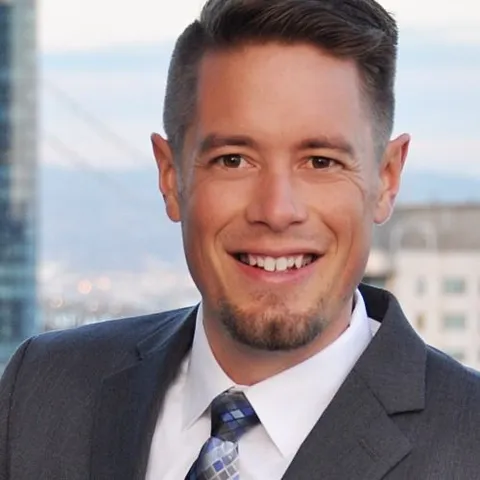
Dan Herr, founder of 6223

Founder

Dan Herr

Dan Herr has spent more than a decade in private equity deal-making, with a background in engineering and technology.

As a Vice President at Serent Capital (2018-2022), he built and led the firm’s origination function as a player-coach, led investments in education and hospitality technology, and served as head of corporate development for several portfolio companies. He later founded Acqwired, building AI and data systems for deal origination, and co-hosts the Deal Sourcery podcast for private equity deal professionals. He holds a B.S. from Cornell University (Engineering Management) and an MBA from the University of Nevada, Reno.

An investor-side technologist: someone who has run origination and built AI systems for it, and knows which tools a partner will actually use.

100+software projects and agentic solutions built for private equity

Dan leads every engagement personally. Vetted engineers and specialists join when the scope requires them — specialists only with your written approval.
Team

  • Muhammad Daniyal Khan

    AI Engineer

    An engineer with more than 12 years in cloud architecture, data engineering and generative AI. He spent seven years at Trilogy building AWS infrastructure, real-time analytics pipelines and AI chat assistants, and is an AWS Certified Solutions Architect.

    LinkedIn

How engagements are staffed

Accountable lead

Dan Herr owns the engagement end to end: scope, architecture decisions, delivery and your partners’ questions.

Specialists, per scope

Engineers in data, ML and evaluation, security and integration, engaged for the work the scope requires — with your written approval and under your access policies.

Continuity

Decisions recorded as they are made, code and runbooks in your repositories, credentials in your systems. Your team holds the keys at every phase.

Why 6223

The boundary makes the freedom possible.

The name comes from Lake Tahoe’s natural rim, 6,223 feet above sea level: the level below which no water flows out of the lake. An enduring boundary beneath a changing surface.

We take the same approach to AI: define the permissions, integrations, controls and economics first, and let useful applications evolve on top.

Source: USGS gage 10337000, Lake Tahoe at Tahoe City, CA — natural rim 6,223 ft, Bureau of Reclamation datum.

Real data Lake Tahoe bathymetry, contours every 100 ft below the rim · USGS 1998 multibeam survey

Where this goes

Applications will change. The foundation should last.

Applications will multiply and change. The value lasts in the foundation beneath them: identity, context, controls, evidence and economics. We build that foundation so every later system is cheaper and safer to add.

Applications · built across the firm

  • Origination agents
  • IC memo drafting
  • Portfolio monitoring
  • LP reporting
  • Research copilots
  • Deal-team workflows
  • Ops automations
  • Firm-built apps

Foundation · shared, governed, durable

  1. IdentityPeople and agents, one source of entitlements
  2. ContextFirm knowledge, governed and portable
  3. ControlsPolicy, boundaries and approval gates
  4. EvidenceA record of actions, sources and approvals
  5. EconomicsSpend measured against outcomes

Planning an AI program — or a decision worth getting right?

  1. A reply from DanYou’ll talk directly with the founder, not a sales team.
  2. A working conversationAbout thirty minutes on the decision or workflow in front of you.
  3. A proposed scopeIf there’s a fit: the first engagement, its artifacts and its cost.

A few lines on what you’re considering is plenty. Please don’t send confidential deal materials in an introductory email.